
Three palliative care professionals share about fulfilling patients’ wishes, as well as their vision for a palliative care sector that enables patients to improve their quality of life and pass on according to their choices.
As palliative patients spend their final moments at the end of life, there is a whole network of healthcare professionals who journey alongside them with compassion and strive to make their last wishes come true.
FULFILLING PATIENTS’ WISHES
A primary care doctor, Dr Clare Tay, has assisted in fulfilling numerous terminally ill patients’ wishes to die in the comfort of their own homes. She has provided care for a variety of palliative patients throughout her time as a junior doctor in the hospital, at Assisi Hospice, a medical house call service, a nursing home and a general practitioner (GP) clinic.

In the case of a newly discharged cancer patient, he became unable to walk, experienced breathing difficulties and had low oxygen levels. Despite that, he was adamant about remaining at home. Dr Tay swung into action to supply the patient with medication, and he was able to remain comfortable till the end.
More importantly, Dr Tay offers a comforting presence and familiar face to her patients, some of whom might otherwise reject the specialist care route. Dr Tay pointed out that GPs like herself are exposed to a huge group of potential palliative care patients who are not being followed up by polyclinics and hospitals. These patients appreciate the convenience of going to the same GP for many years and have built a meaningful connection with their regular doctor over time.
“There were times where I picked up on symptoms and referred them to a specialist, but patients also like the continuity of me being there to provide an extra layer of reassurance,” explained Dr Tay.
Similarly, palliative specialists such as Dr Ong Eng Koon, a senior consultant at the National Cancer Centre Singapore’s Division of Supportive and Palliative Care, and his various home hospice teams step in to fulfil patients’ wishes. Often, palliative care patients may desire
to spend more time with their loved ones, including visits to places that are special to them.
To ensure that such requests are supported, Dr Ong and his team monitor the condition of their patients closely and institute medical interventions to control symptoms in a timely manner. These may involve adjusting of opioids for pain or breathlessness as well as treating infections, to enable patients to spend quality time with their loved ones in a comfortable and meaningful way.
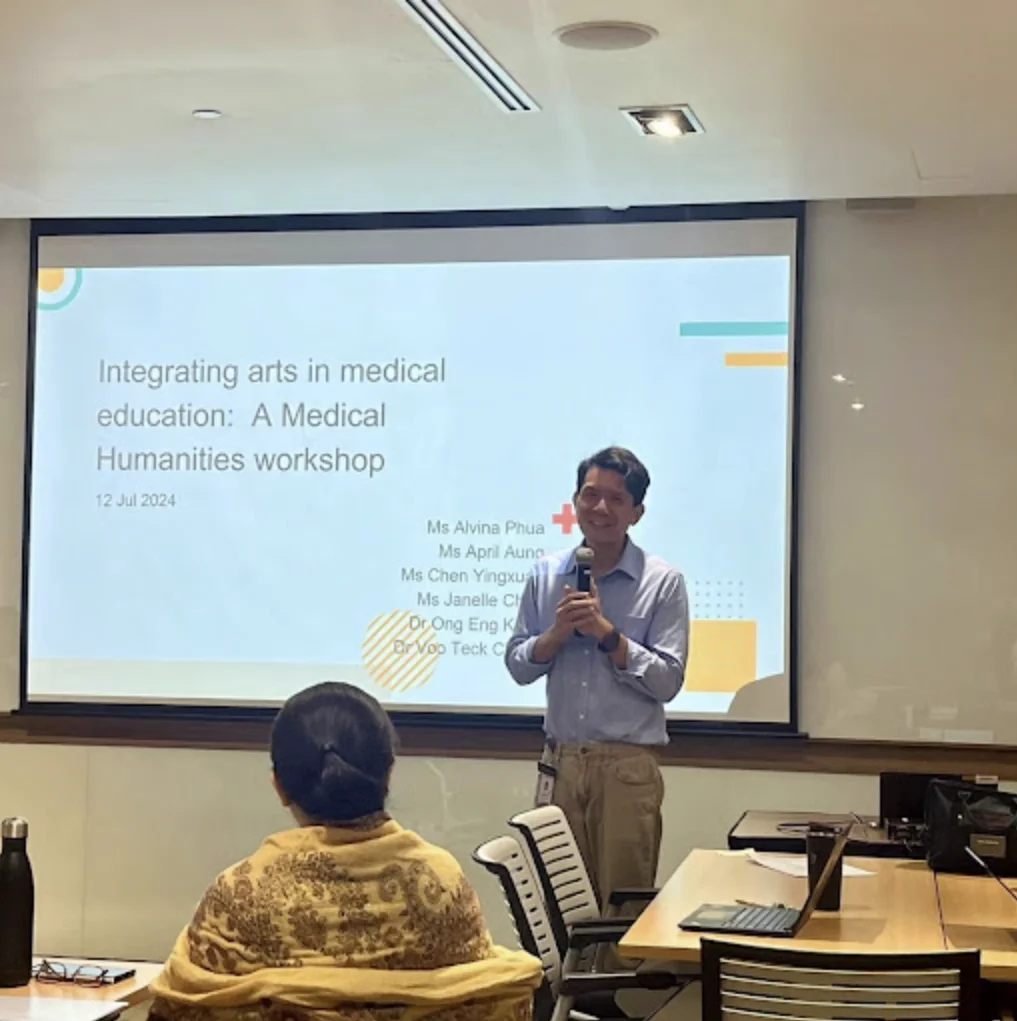
“The role of the home hospice team is to make sure that the patient is comfortable enough to carry out activities that are important to them,” said Dr Ong, who also consults with Assisi Hospice.
In more complex situations,Dr Ong and his team have also gone the extra mile to support their patients. For example, they have arranged for foreign terminally ill patients to return to their home countries, making preparations for the trip such as working with palliative care services overseas, arranging documentation for packed medication to clear customs, and establishing a crisis management plan in the event of patient deterioration en route.
Even physiotherapists who are not commonly associated with palliative care can work wonders for patients nearing the end of their lives.
Cindy Ong, a physiotherapist at Ren Ci Hospital’s Rehabilitation Department, works with patients with chronic obstructive pulmonary disease (COPD), a lung disease that causes breathing problems. She has helped these patients improve their physical functions, which in turn improves their ability to carry out their daily activities. For instance, she supports them with symptom management, empowers them to manage their breathlessness, and teaches them exercises to help them with their daily activities.
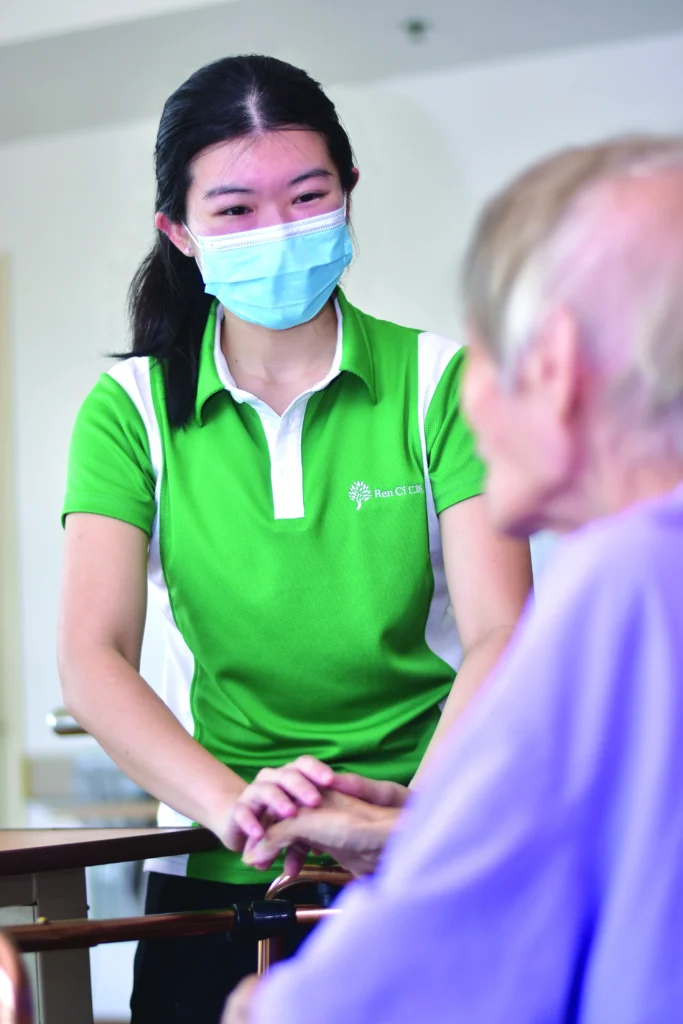
“They are able to achieve tiny milestones, such as walking, standing for longer periods to do gardening, or sitting for a meal with their family,” explained Ms Ong, noting that they won’t feel boxed in. One particular case involved assisting a COPD patient who could only walk for five metres before needing to take a break. She taught him endurance methods such as energy conservation, pursed lip breathing, and how to monitor and adapt his schedule based on his breathlessness.
Following their sessions, the patient was able to walk for at least 150 metres without feeling out of breath. He was also able to adapt the ideas to his daily activities and began taking longer, relaxing showers
PUSHING FOR PRIMARY PALLIATIVE CARE
While providers of palliative care spend a lot of their time making the wishes of their patients come true, these healthcare professionals have aspirations for the sector too.
Singapore Hospice Council conducted the first-ever survey to map the local landscape of primary palliative care in 2023, with the goal of understanding primary care doctors’ preferences for providing such care.
Primary palliative care is a subset of generalist palliative care that encompasses early identification and initiation of palliative care as part of integrated chronic disease management but this practice is still evolving.
Primary care physicians are not yet fully engaged in palliative care. However, the results from
the survey highlighted that, as the first line of care in the community, many primary care doctors, like GPs, perceive the expanding needs on the ground and want to do more to provide palliative care.
In Singapore, the demand for palliative care is projected to increase with the country’s rapidly ageing population, increased life expectancy, and growing burden of chronic diseases.
About 92 per cent of primary care doctors who participated in the survey felt that their role in the care of palliative patients is somewhat important as it is well-aligned with primary care principles — to provide accessible, comprehensive, continuous and coordinated patient-centred care. Ninety-four per cent of respondents are aware of available hospital- and community-based palliative care services, while about 93 per cent believe that primary care doctors should receive training in palliative care to improve their palliative care skills and confidence.
However, there are hurdles when it comes to GPs providing such care.
Primary care doctors who took part in the survey acknowledged that more focus is put on addressing patients’ acute symptoms and that there were infrequent encounters with patients at the end of life and limited formal collaborations with specialist care teams.
In addition, there is a lack of resources to support palliative care delivery by primary care doctors, such as time (69 per cent), access to interdisciplinary teams (61 per cent), and access to medications (54.3 per cent).
Dr Tay wishes for palliative care medication to be made more readily available to GPs, who often have to rely on referrals to hospitals or hospices to take over patient care in such cases. These medications are crucial in end-of-life care to manage patients’ symptoms and ease their suffering. She also believes that GPs may benefit from more clinical training and guidance in starting end-of-life conversations with patients.
Primary care doctors may find it difficult to identify who requires palliative care due to factors like limited knowledge, a lack of access to complete medical information, and the dynamic and unpredictable trajectories of chronic diseases. Furthermore, many primary care doctors also commonly associate palliative care with advanced cancer or end-stage chronic disease diagnoses, but this narrow definition limits the recognition of patients with early palliative care needs, such as dementia.
“Patients sometimes have a skewed view of their medical conditions and only tell us certain things, so we have to piece the story together. It makes it difficult for us to know whether their condition has deteriorated,” she explained.
Dr Tay cited the case of an 80-year-old patient with COPD who was hooked up to an oxygen tank. Feeling more breathless than usual, the patient visited the GP clinic to request antibiotics. The patient declined to tell Dr Tay his usual oxygen levels and expressed the wish to remain at home. After much consideration, she called the patient’s family to inform them of the situation and advised him that the safest option was to go to the hospital for further monitoring.
Some GPs may not know the full suite of available social services to refer patients to, while others
are unaware of daily ground-level hospice operations, as it is uncommon to get a palliative care or hospice care posting. This impedes their ability to promote such services to patients, said Dr Tay.
There is a clear need for increased awareness and support for a growing population of elderly patients who prefer to receive care from their GPs at home. “As we get older, it becomes necessary to consider our end-of-life wishes. Do we want to stay at home? Do we want to go to the hospital? Is it vital to have family around? These are all important discussions to have,” she said.
MOVING FOWARD FOR THE SECTOR
For Dr Ong, one of his biggest hopes is to see more young medical students and junior doctors exploring and considering a career in palliative medicine. In his role as an assistant professor at Duke- NUS Medical School, Dr Ong teaches students important aspects of palliative medicine. Central to this is palliative medicine’s philosophy of care, which focuses on quality of life, personhood, and supporting both patients and their families. It is envisaged that students develop the knowledge and skills taught and continue to apply them after graduation even in areas other than palliative care.
Dr Ong is also a strong advocate for generalist palliative care training, having participated in various educational programmes for other specialist physicians and colleagues in the primary care sector. He hopes that existing collaborations with other stakeholders from different disciplines and settings will continue to flourish. This will allow patients and caregivers to be supported in serious illness conversations, navigation of the sometimes complex healthcare system
For Ms Ong, she wishes that more physiotherapists understand the importance of physiotherapy in palliative care and that there is more formal training and support for physiotherapists in palliative care.
“The common viewpoint is: ‘Oh, there’s nothing much we can do with end-of-life patients, so we don’t need to get them to exercise as that would push them too hard.’ But actually, there’s so much more that physiotherapists can do to improve patients’ lives,” she said.
ENSURING A QUALITY END-OF-LIFE FOR EVERYONE
The evolving landscape of palliative care in Singapore reflects a growing recognition of the need to align healthcare services with the nuanced and often deeply personal wishes of patients facing life-limiting illnesses.
Healthcare professionals are acutely aware of the need for the landscape to improve to fulfil the growing need for palliative care, which is being driven by an ageing population and a rising prevalence of chronic diseases. Their goal is not merely to provide symptom relief but to ensure that the care provided is personalised to each patient’s own interests and values. This involves
a comprehensive understanding of patients’ desires regarding end- of-life care and a commitment to integrating these preferences into care plans.
To achieve this vision, significant efforts are required to develop and implement systems that support personalised palliative care. This includes expanding training programmes for healthcare providers to enhance their skills in communication and empathy, investing in resources that facilitate patient-centred care, and fostering interdisciplinary collaboration to address the complex needs of patients and their families.
The dedication of healthcare professionals in Singapore is evident, as they continuously strive to
adapt and improve the palliative care landscape. Their commitment reflects a broader aspiration to ensure that every patient receives care that is not only clinically effective but also deeply respectful of their personal wishes and dignity.